
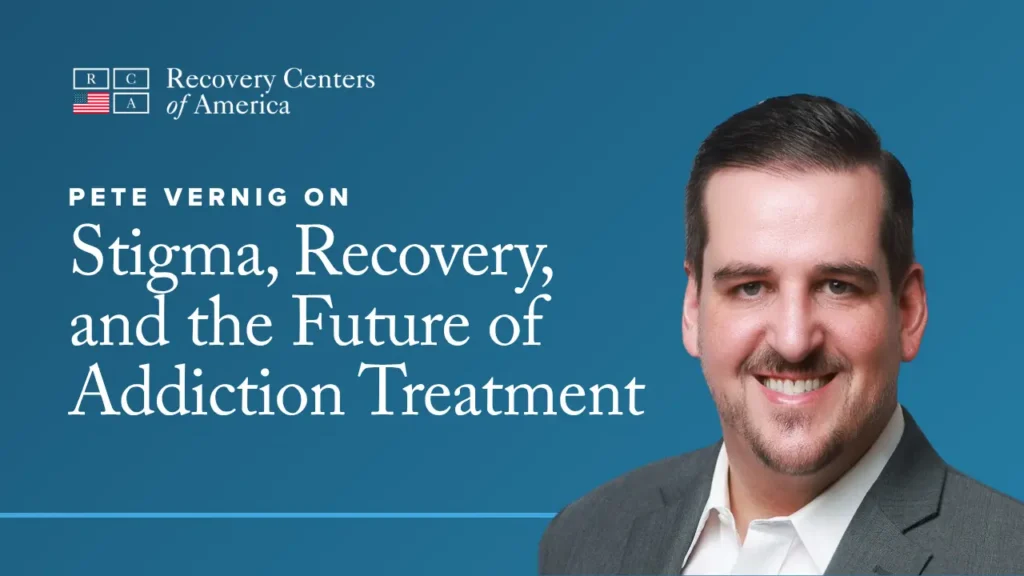
Recovery Centers of America Vice President of Mental Health Services Pete Vernig, PhD, recently joined the Hart and Hustle podcast for a conversation about addiction treatment, mental health stigma, and what it takes to support lasting recovery.
Click here to watch the full episodeStigma Is Both a Social Problem and a Clinical Barrier
One of the most powerful moments in the episode comes when Pete addresses the real-world consequences of mental health stigma. He makes the case that stigma around addiction is not only uncomfortable but also dangerous. When people feel ashamed, embarrassed, or weak for needing help, they don’t reach out. The consequences of not reaching out can be fatal.
Pete points to suicide and overdose as direct outcomes of untreated addiction and mental illness. He argues that open conversation is one of the most effective tools for breaking this cycle. Hearing someone share a personal story creates connection. It makes addiction harder to dismiss as a character flaw and easier to recognize as a treatable medical condition.
Community Support Is the Strongest Protective Factor
Drawing on years of clinical experience and research, Pete identifies community support as one of the major predictors of successful addiction recovery. This applies to both substance use disorders and serious mental illness.
He describes two dimensions of that support:
- The first is functional: helping someone get to follow-up appointments, making sure they take prescribed medication, and preventing dropout from ongoing care.
- The second is emotional: having someone who listens, who cares, and who reinforces the message that recovery is worth pursuing.
Both dimensions matter. Pete emphasizes that having someone in your corner serves as a powerful reinforcer that keeps people engaged in treatment, whether that’s a family member, a friend, or a peer in recovery.
Relapse Doesn’t Erase Progress
Pete addresses a common misconception head-on: the idea that relapse means treatment has failed. He compares substance use disorder to other chronic, relapsing conditions like diabetes or cancer, in that a return of symptoms doesn’t negate the time spent in remission – it doesn’t erase the skills learned or the relationships rebuilt during that period.
This perspective shapes how Recovery Centers of America approaches relapse prevention. Pete reveals that his current research at RCA focuses on predicting which individuals are at highest risk for relapse based on factors like demographics, depressive symptoms, trauma history, and treatment participation. The goal is to identify vulnerability early and intervene before a setback occurs, shifting the model from reactive to preventive.
Virtual Addiction Treatment Increases Access to Care
Access remains one of the biggest barriers to substance use disorder treatment in the United States. Pete explains that many communities, especially rural areas, simply lack local behavioral health services. Even in areas where services exist, logistical hurdles like transportation, work schedules, and childcare prevent people from walking through the door.
Virtual addiction treatment has changed that equation. Pete notes that someone who won’t drive 20 minutes to sit in a waiting room might readily log on from home. The pandemic of 2020 accelerated virtual care adoption, and Pete sees this expanded access as one of the most impactful developments in modern behavioral healthcare.
AI Needs Guardrails in Mental Health
The conversation also touches on artificial intelligence and its growing presence in healthcare. Pete takes a measured stance, stating that AI is a tool and not inherently good or bad. It can serve as a useful gatekeeper, connecting people to resources and authoritative information when they’re searching for help at 2am. He draws a firm line, though, at AI replacing legitimate mental health treatment. He cites documented cases of AI models providing dangerous advice and stresses the need for strong guardrails before these tools are trusted in clinical contexts.
Listen to the Full EpisodeWatch the full conversation between Pete Vernig and Efrain on the Hart and Hustle podcast. Whether you’re dealing with recovery personally, supporting a loved one, or working in behavioral health, this episode offers practical insight grounded in clinical expertise.
If you or someone you know is in crisis, call or text 988 to reach the Suicide and Crisis Lifeline.
If you or someone you care about is struggling with addiction or a co-occurring mental health disorder, Recovery Centers of America is here to help. Contact us today. Call 1.800.RECOVERY to speak with a Treatment Advisor 24/7.


