
- Inpatient in St. Charles, IL
Mental Health Treatment That Helps You Feel Like Yourself Again
If you’re living with depression, anxiety, trauma, bipolar disorder, dual diagnosis, or another mental health condition, even simple things can feel difficult, like getting through the day, staying connected to people you care about, or finding the energy and focus you once had.
Maybe you’ve tried to manage it on your own or told yourself it will pass. But when symptoms continue, worsen, and begin to affect your relationships, work, sleep, or sense of stability, it’s a sign that real, clinical support could help.
Mental health diagnoses are medical conditions, and they are treatable with the right level of care.



At Recovery Centers of America, we provide evidence-based mental health treatment in a safe, respectful, and structured environment. Our multidisciplinary clinical team works with you to understand what you’re experiencing and build a personalized plan that helps you stabilize, gain clarity, and move forward with confidence.
Whether you’re seeking care for mental health on its own or alongside substance use, you’ll find:
- Psychiatric evaluation and medication management when needed
- Group and individual therapy using proven approaches like CBT and DBT
- A personalized, evidence-based treatment pathway matched to your needs
- Trauma-informed care
You don’t have to wake up another day thinking “I can’t live like this anymore.” Healing is possible with the right support, and it can start sooner than you think!
Call 1.800.RECOVERY or Verify Your Insurance to take the first step today.
What Is Mental Health Treatment?
Key Takeaways:
- Mental health treatment addresses conditions like depression, anxiety, PTSD, schizophrenia, bipolar disorder, and other mental illness through therapy, medication, and comprehensive support
- Treatment is highly individualized. There’s no one-size-fits-all approach
- Both residential (inpatient) and outpatient options are available
- Evidence-based therapy combined with psychiatric care produces the best outcomes
- Healing is possible. Most people with mental health conditions improve significantly with proper treatment
Mental health treatment is a structured, supportive process that helps you feel stable, think more clearly, and reconnect with your thoughts, emotions, and behaviors. Through evidence-based therapies, psychiatric evaluation and medication management when needed, skill-building, and ongoing support, mental health treatment helps you understand what you’re experiencing, reduce symptoms, respond to stress in healthier ways, and build a life that feels meaningful, manageable, and sustainable.
At Recovery Centers of America, you’re supported by a coordinated team of psychiatric providers, therapists, nurses, and other behavioral health professionals who work together to design a plan around your symptoms, your goals, and your pace.


Who Benefits from Professional Mental Health Treatment?
Key Takeaways:
- Anyone whose mental health symptoms interfere with work, relationships, or quality of life
- People who’ve tried self-help strategies without lasting improvement
- Individuals managing mental illness alongside substance use (dual diagnosis)
- People who want more than just coping. They want genuine healing
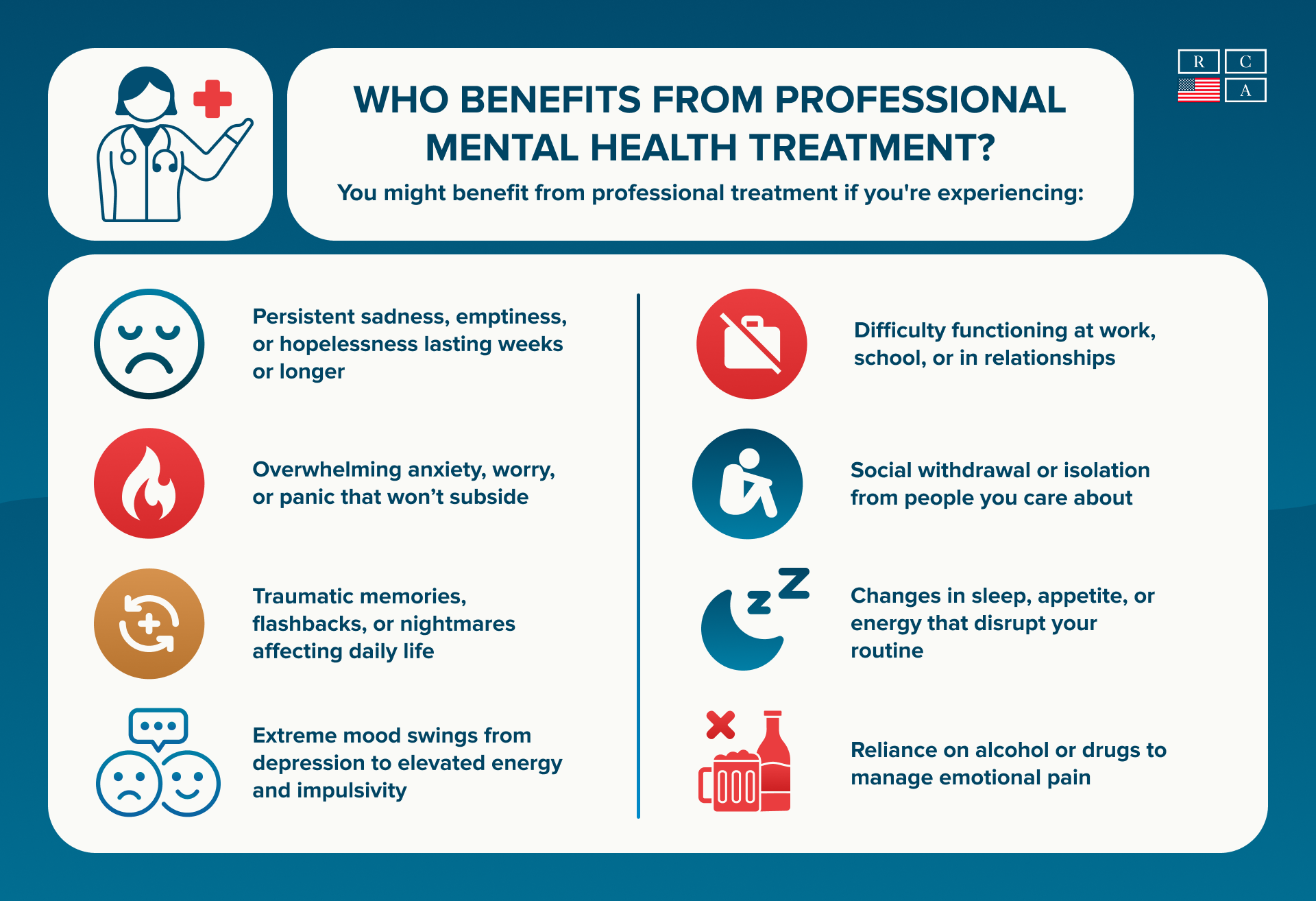
You might benefit from professional treatment if you’re experiencing:
- Persistent sadness, emptiness, or hopelessness lasting weeks or longer
- Overwhelming anxiety, worry, or panic that won’t subside
- Traumatic memories, flashbacks, or nightmares affecting daily life
- Extreme mood swings from depression to elevated energy and impulsivity
- Difficulty functioning at work, school, or in relationships
- Social withdrawal or isolation from people you care about
- Changes in sleep, appetite, or energy that disrupt your routine
- Reliance on alcohol or drugs to manage emotional pain
Mental illnesses exist on a spectrum. Some people need short-term support during a crisis. Others benefit from longer-term care. Professional assessment helps determine what level of treatment matches your needs.
What Conditions Does RCA Treat?
Key Takeaways:
- RCA treats a comprehensive range of mental health conditions in adults
- Mental health treatment (without substance use) is available at our Indiana and Massachusetts facilities
- Dual diagnosis treatment (mental health with addiction) is available at all RCA locations

Conditions We Treat Include:
Mood Disorders
- Major depressive disorder
- Persistent depressive disorder (dysthymia)
- Bipolar I, II, and III disorder
- Seasonal affective disorder
Anxiety Disorders
- Generalized anxiety disorder
- Panic disorder
- Social anxiety disorder
- Phobias
Trauma-Related Disorders
- Post-traumatic stress disorder (PTSD)
- Complex PTSD
- Acute stress disorder
Other Conditions
- Personality disorders
- Schizophrenia and schizoaffective disorder
- Attention-deficit hyperactivity disorder (ADHD)
- Obsessive-compulsive disorder (OCD)
Each requires a tailored approach. What works for depression may differ significantly from what helps PTSD or bipolar disorder. Our clinical teams assess your specific symptoms, history, and circumstances to develop treatment plans that address your unique needs.
What’s the Difference Between Mental Health Treatment and Dual Diagnosis Care?
Key Takeaways:
- Mental health treatment focuses on conditions such as depression, anxiety, bipolar disorder, or PTSD when substance use isn’t present
- Dual diagnosis care treats mental health and substance use together, because recovery works best when they’re addressed at the same time
- Recovery Centers of America offers both, so your care is aligned with your full story — not a one-size-fits-all program
- Your recommended pathway is determined through a comprehensive assessment, ensuring you receive the level and type of support that fits your needs
Understanding this distinction helps ensure you receive the care designed for your mind, body, and experiences.
Mental Health Treatment at Recovery Centers of America
You may be living with depression, anxiety, PTSD, bipolar disorder, or another condition that affects how you think, feel, and function — and you deserve care that focuses fully on that.
RCA’s Restore pathway (available at select locations) provides comprehensive, personalized mental health treatment for adults without active substance use. Your care may include a psychiatric evaluation, evidence-based therapy, medication management when appropriate, and practical skills that support long-term stability, resilience, and overall wellness.


Dual Diagnosis Treatment at Recovery Centers of America
For many people, mental health challenges and substance use are closely connected. When both are present, treating only one often leads to setbacks — symptoms return, stress increases, and it becomes harder to maintain progress.
RCA’s Balance pathway, available across our network, delivers fully integrated care for co- occurring conditions. From medical detox through outpatient treatment to aftercare, your plan addresses both your mental health and substance use at the same time with coordinated therapy, psychiatric support, medication management when needed, and relapse-prevention strategies designed for lasting recovery.
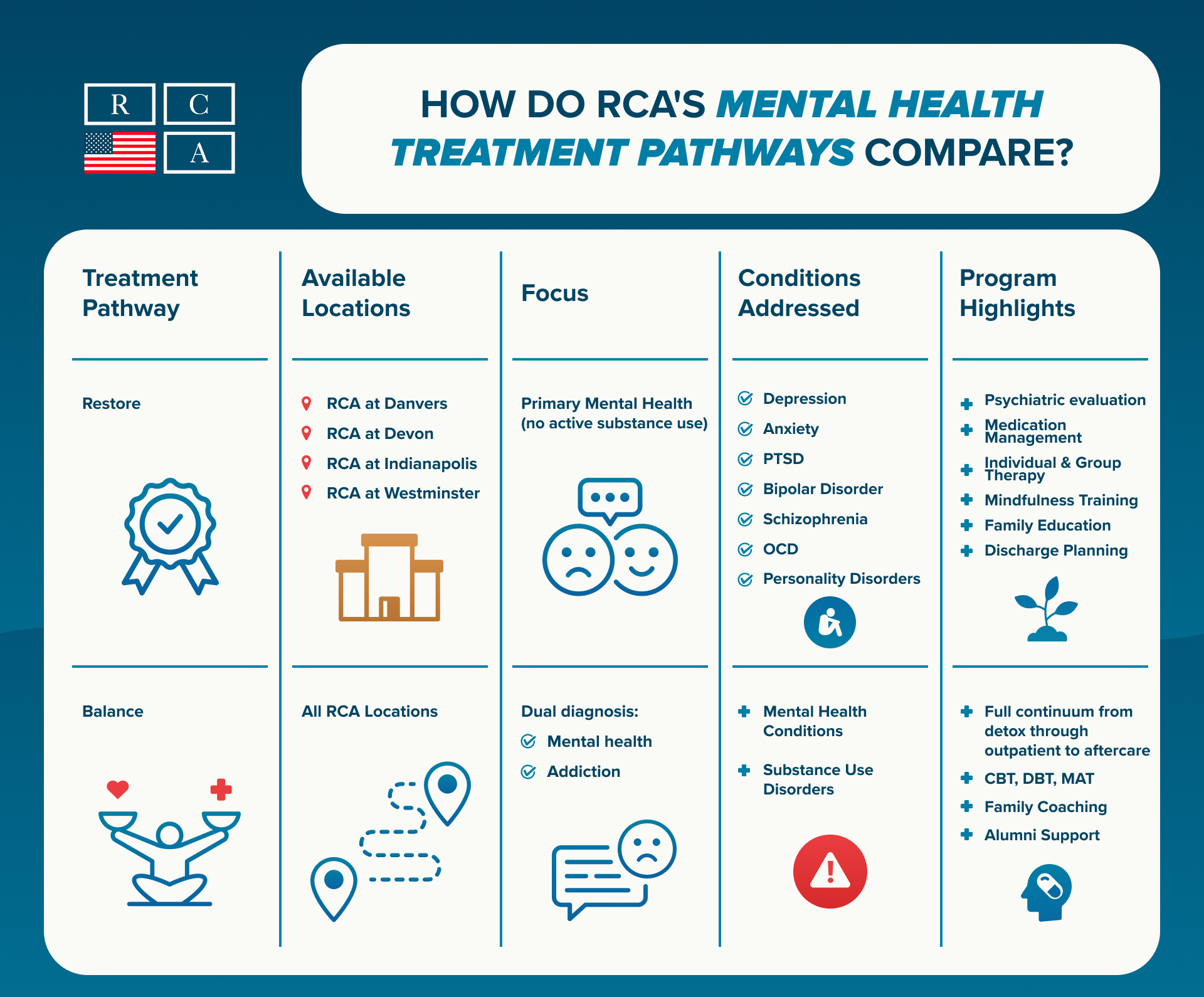
How Do RCA’s Treatment Pathways Compare?
| Treatment Pathway | Focus | Conditions Addressed | Available Locations | Program Highlights |
|---|---|---|---|---|
| Restore | Primary mental health (no active substance use) | Depression, anxiety, PTSD, bipolar disorder, schizophrenia, OCD, personality disorders | RCA at Indianapolis RCA at Danvers RCA at Westminster RCA at Devon | Psychiatric evaluation, medication management when appropriate, individual/group therapy, mindfulness training, family education, discharge planning |
| Balance | Dual diagnosis (mental health + addiction) | Mental health conditions alongside substance use disorders | All RCA locations | Full continuum from detox through outpatient to aftercare Integrated psychiatric and addiction care CBT, DBT, and MAT when appropriate Family coaching Alumni support |
| Foundations of Recovery | First-time addiction treatment | Substance use disorders (with mental health support if needed) | All RCA locations | Comprehensive introduction to recovery, education, skill- building, foundation for sustained sobriety Full continuum from detox through outpatient to aftercare CBT, DBT, and MAT when appropriate Family coaching Alumni support |
| Fresh Start | Addiction treatment after relapse or multiple addiction treatment episodes | Substance use disorders (with mental health support if needed) | All RCA locations | Advanced therapeutic interventions, relapse analysis, strengthened recovery foundation Full continuum from detox through outpatient to aftercare CBT, DBT, and MAT when appropriate Family coaching Alumni support |

What Does Mental Health Treatment at Recovery Centers of America Include?
Key Takeaways:
- Comprehensive psychiatric evaluation to understand your diagnosis and needs
- Evidence-based therapies including CBT, DBT, MI, and trauma-focused approaches
- Medication management by experienced psychiatrists when appropriate
- Individual and group therapy
- Family involvement including education, coaching, and support
- Whole-person support including mindfulness, wellness activities, and life skills
- Discharge planning, continuing care coordination, alumni engagement for lifelong support
Psychiatric Evaluation and Diagnosis
Effective treatment starts with accurate understanding. Our medical team conducts a thorough evaluation examining your symptoms, history, previous treatments, family background, and current functioning. This assessment guides diagnosis and treatment planning, ensuring interventions target your actual needs rather than assumptions.
Evidence-Based Therapies
Cognitive Behavioral Therapy (CBT)
CBT helps you identify and change the thought patterns driving your distress. You’ll learn to recognize cognitive distortions, like catastrophizing or black-and-white thinking, and develop healthier ways of interpreting experiences. Research consistently shows CBT’s effectiveness for depression, anxiety, PTSD, and many other conditions.
Dialectical Behavior Therapy (DBT)
DBT builds practical skills in four key areas: mindfulness (staying grounded in the present), distress tolerance (surviving crises without making things worse), emotional regulation (managing intense feelings), and interpersonal effectiveness (working at relationships).
Originally developed for borderline personality disorder, DBT helps anyone struggling with emotional intensity.
Motivational Interviewing (MI)
MI helps you explore and strengthen your own reasons for change. Instead of directing or confronting, we use open questions, reflective listening, and affirmation to help build your confidence and support self-driven decision-making, empowering you to move toward recovery at your own pace, aligned with your own values.
Trauma-Informed Care
For those carrying the weight of past trauma, our trauma-informed approach creates safety while helping you process painful experiences. Specialized interventions can reduce trauma’s emotional charge, freeing you from its grip.
Group Therapy
Healing often happens in community. Group sessions provide connection with others who understand your struggles, reduce isolation, and offer opportunities to learn from peers’ experiences. You’ll discover you’re not alone, and that recovery is possible.
Medication Management
When appropriate, psychiatric medications can significantly improve symptoms and quality of life. Our psychiatrists carefully evaluate whether medication might help, select appropriate options, monitor response, and adjust as needed. Medication isn’t right for everyone, and it’s rarely sufficient alone, but it can be life-changing when combined with therapy.
Whole-Person Support
Mental health involves more than symptoms. Our programs include mindfulness and meditation training, physical wellness activities, nutritional support, sleep hygiene education, and life skills development. These elements support your overall wellbeing and build resilience for long-term recovery.
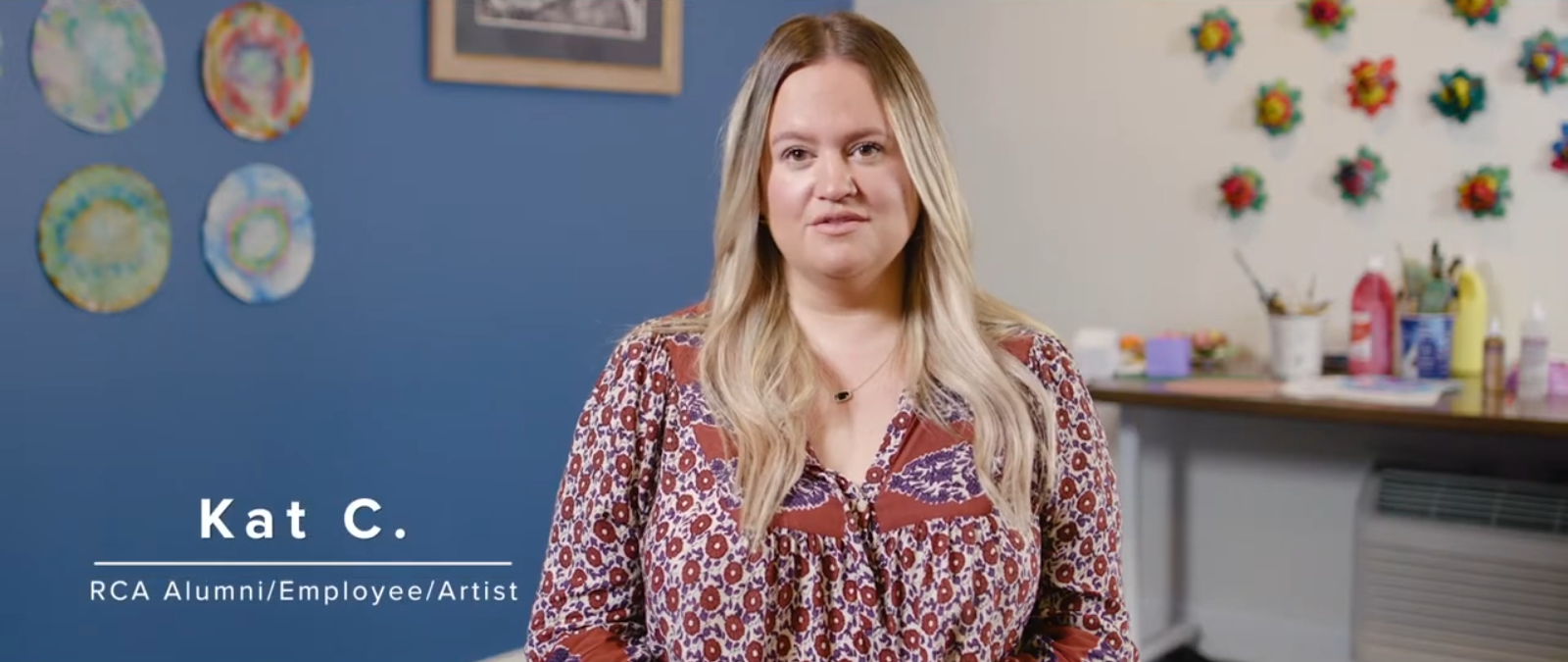

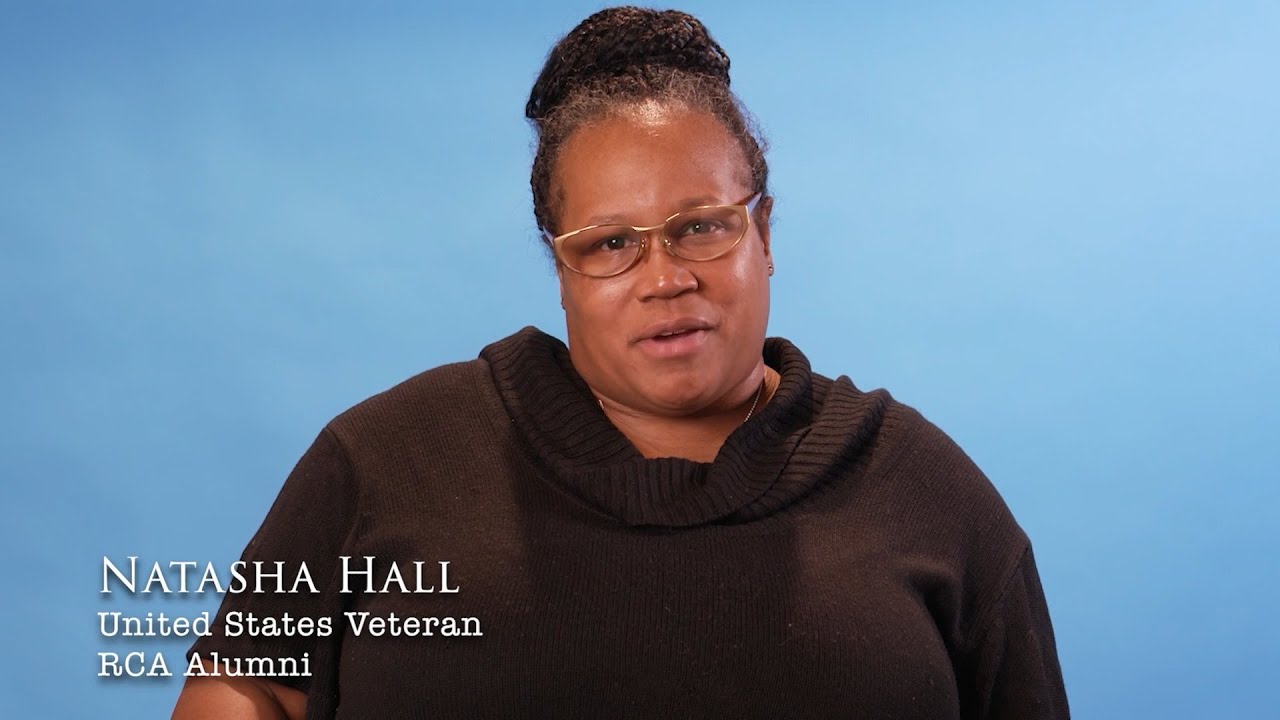
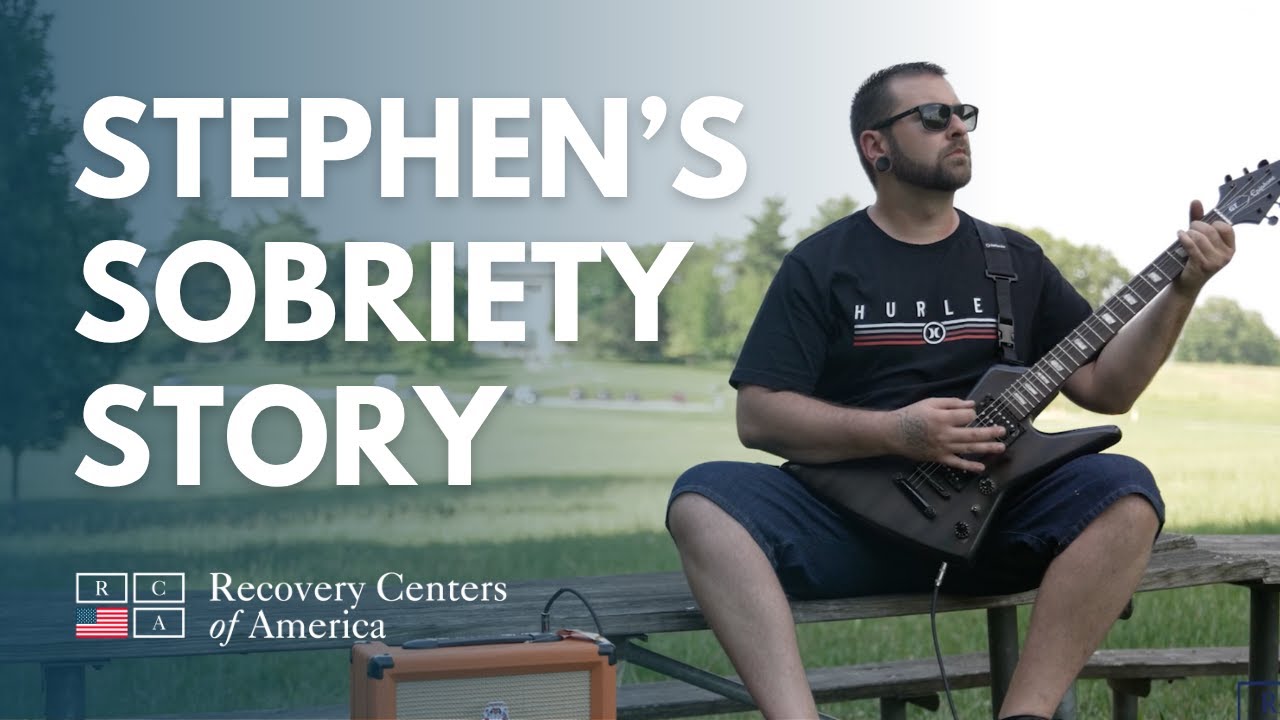


"Great presentation tonight with Jaye. Thank you for offering support for families. We appreciate RCA."
- Cheryl A Harden
"Jaye was extremely knowledgeable, kind, caring, and informative. We clarified several questions which will better prepare us to help our loved one."
- M-Q F.
"These meetings and webinars help tremendously. The facilitators and other family members provide a safe space and understanding"
- Tracy T.
"We are new to the addiction/depression struggles of our son. It is very overwhelming, especially when he refuses to stop drinking. RCA has a lot of help to offer. We will be in touch soon. Thank you."
- Kathleen F.
How Does RCA Treat Specific Conditions?
How Does RCA Treat Depression?
Depression treatment at RCA combines multiple approaches based on your specific type and severity of depression. CBT helps identify and restructure negative thought patterns.
Behavioral activation gradually rebuilds engagement with activities that bring meaning and pleasure. When appropriate, antidepressant medications can help restore the chemical balance in your brain. For treatment-resistant depression, we explore additional options and ensure you’re connected with appropriate resources.
How Does RCA Treat Anxiety Disorders?
CBT addresses the catastrophic thinking that fuels anxiety. DBT skills help you tolerate distress without avoidance. Medication options may include both daily preventive medications and as-needed relief for acute symptoms, carefully managed to avoid dependence.
How Does RCA Treat PTSD and Trauma?
Trauma treatment requires specialized approaches delivered by trained clinicians in a safe therapeutic environment. We use evidence-based modalities to help you learn new skills to manage posttraumatic symptoms and reduce the impact they have on your life. Treatment moves at your pace. Trauma healing cannot be rushed.
How Does RCA Treat Bipolar Disorder?
Bipolar disorder requires careful psychiatric management to stabilize mood swings while minimizing medication side effects. We combine mood-stabilizing medications with psychoeducation about the illness, recognition of early warning signs, lifestyle modifications that support stability, and therapy addressing the interpersonal and psychological impacts of living with bipolar disorder.

What Should Families Know About Supporting a Loved One?
Key Takeaways:
- Mental health conditions affect entire families, not just the person diagnosed
- Family involvement significantly improves treatment outcomes
- Education helps families understand what their loved one is experiencing
- Learning new communication patterns can repair and strengthen relationships
- Taking care of yourself isn’t selfish but essential
Why Family Involvement Matters
Mental health challenges don’t exist in isolation. They ripple outward, affecting relationships, communication, and family dynamics. Sometimes family patterns inadvertently maintain symptoms. Other times, families desperately want to help but don’t know how, and accidentally make things worse.
Research consistently shows that family involvement improves treatment outcomes. When loved ones understand the condition, learn effective communication strategies, and participate meaningfully in recovery, healing accelerates.

RCA’s Family Support Services
Educational Resources
We provide comprehensive education about mental health conditions, treatment approaches, and what to expect during recovery. Understanding replaces confusion and fear.
Webinars and Support Groups
Connecting with other families confronting similar challenges reduces isolation and provides practical wisdom from those who’ve walked this path.
Boundary-Setting Guidance
Learning to support your loved one while protecting your own wellbeing is essential. We help families establish healthy boundaries that help everyone.

How to Talk to Someone You’re Worried About
If someone you love is struggling, approaching them can feel daunting. Here’s what to do:
- Choose the right Find a calm, private time, not during a crisis or argument.
- Express concern, not Use “I:” statements: “I’ve noticed you seem down lately, and I’m worried about you.” Avoid accusatory language or demands.
- Listen more than you Create space for them to share without immediately offering solutions or minimizing their experience.
- Suggest professional help “Have you thought about talking to someone? I’d be happy to help you find options.”
- Respect their You can’t force someone into treatment (except in specific crisis situations). But you can make clear you support them getting help.


What Makes RCA Different?
Key Takeaways:
- 24/7 admissions with same-day intake often available
- 15+ locations nationwide and growing
- Newsweek-ranked among America’s Best Treatment Centers
- Joint Commission accredited facilities
- In-network with 75+ major insurance providers
- Provides transportation assistance
- Full continuum of care from residential through outpatient and alumni support
Around-the-Clock Access
Mental health crises don’t wait for business hours. Our admissions team is available 24/7 to answer questions, provide support, and facilitate treatment entry when you’re ready.
Specialized Treatment Pathways
We don’t believe in generic treatment. Our pathways (Restore for primary mental health, Balance for dual diagnosis, Foundations of Recovery and Fresh Start for addiction) ensure you receive care designed for your specific situation.
Expert Clinical Teams
Our psychiatrists, therapists, nurses, and support staff bring specialized expertise in mental health and addiction treatment. Many team members have advanced credentials, years of experience with complex cases, and genuine passion for helping people heal.
Evidence-Based Approaches
We use treatments proven effective through rigorous research, not trends or unvalidated methods. CBT, DBT, MI, trauma-focused therapies, and medication management when appropriate form the foundation of our clinical programming.
Insurance Navigation Support
Understanding coverage shouldn’t be a barrier to care. Our team works with most major insurance providers to verify benefits and maximize coverage, making treatment accessible.
Seamless Continuum of Care
Recovery isn’t a single event but an ongoing journey. We provide smooth transitions between levels of care, from intensive residential treatment through outpatient support and alumni programming, ensuring continuity throughout your recovery.
Why getting support matters
Mental health symptoms often don’t get better on thier own. Without the right care, many people notice they have less energy, experience more withdrawal, have more difficulty concentrating, and less connection to the things and people that matter.
Over time, this can affect relationships, physical health, work, and overall quality of life. Some people begin using alcohol or other substances to cope, which adds another layer of complexity to what they’re already carrying.
Seeking help can give you the support, stability, and tools that make life feel manageable again.

What healing can make possible
With effective treatment, change is often steady and practical. Many people notice themselves:
- Thinking more clearly and feeling more emotionally balanced
- Having energy for daily life again
- Reconnecting with people and activities they care about
- Sleeping and eating more consistently
- Recognizing early warning signs and knowing what to do next
With the skills, support, and stability you need to keep moving forward, you can begin to feel like yourself again.


How Do I Get Started?
The process is simple and fast:
- Call or complete a confidential assessment
- Contact us at 1.800.RECOVERY or complete our online form. Our admissions team will listen to your situation and answer your questions
- Verify insurance This takes just minutes. We’re in-network with 75+ major insurance providers and accept most out-of-network plans. Self-pay options are also available
- Receive 24/7 admissions support
- Our team guides you through every step, coordinating logistics so you can focus on getting better
- Begin treatment
Same-day admission is often available for those ready to start immediately.
Frequently Asked Questions
What conditions does RCA treat?
RCA treats a wide range of mental health conditions including anxiety disorders, depression, PTSD, bipolar disorder, personality disorders, OCD, and schizophrenia. We also provide integrated dual diagnosis treatment for those managing mental illness alongside substance use disorders. Our clinical teams specialize in complex cases that haven’t responded to outpatient treatment alone.
How do I verify my insurance coverage?
Call our admissions line at 1.800.RECOVERY or use our online verification tool. Our team will contact your insurance provider, determine your benefits, and explain your coverage clearly, including any deductibles, copays, or out-of-pocket costs. This process typically takes just minutes.
What’s the difference between the Restore and Balance pathways?
The Restore Pathway (available at select RCA locations) provides mental health treatment for adults without active substance use disorders. The Balance Pathway (available at all RCA locations) offers integrated dual diagnosis care for those managing both mental illness and addiction. Assessment during admissions determines which pathway fits your needs.
How long does treatment last?
Treatment duration varies based on individual needs, symptom severity, and clinical recommendations. Residential stays typically range from 2 to 6 weeks, with some people benefiting from longer care. Many step down to partial hospitalization or intensive outpatient programs afterward. Your treatment team will recommend a timeline and adjust based on your progress.
Can I continue working during treatment?
Residential treatment requires taking time away from work. However, outpatient levels of care, including partial hospitalization and intensive outpatient programs, can often accommodate work schedules. Many employers are required to provide leave for mental health treatment under FMLA. Our team can help you work through these considerations.
Do you accept Medicare or Medicaid?
Coverage varies by location and specific plan. Contact our admissions team at 1.800.RECOVERY for verification of your specific benefits. We work to make treatment accessible regardless of insurance type.
What should I bring to residential treatment?
Pack comfortable clothing for about 10 days (laundry facilities available), toiletries in original packaging, prescription medications in labeled containers, photo ID, insurance cards, and contact information for important people. Leave valuables and internet-enabled devices at home. You’ll receive a complete packing list during admissions.
How is family involved in treatment?
Family involvement is encouraged and often beneficial. We offer educational resources, family therapy sessions, support groups, and guidance on communication and boundaries. Family participation helps create a supportive environment that reinforces treatment gains after discharge.
What happens after treatment ends?
Continuing care planning begins during treatment. Before discharge, you’ll have a concrete plan including outpatient appointments, support group connections, medication management arrangements, and strategies for maintaining wellness. Our alumni program provides ongoing support and connection.
For more detailed information, visit our Help Center or call our admissions team at 1.800.RECOVERY.
Take the First Step Today
Recovery Centers of America is here when you’re ready. Our Mental Health Treatment team understands what you’re facing, and we have the expertise to help you find your way forward.
Call 1.800.RECOVERY now. Our admissions team is available 24 hours a day, 365 days a year.
You deserve to feel like yourself again. Let us help you get there.