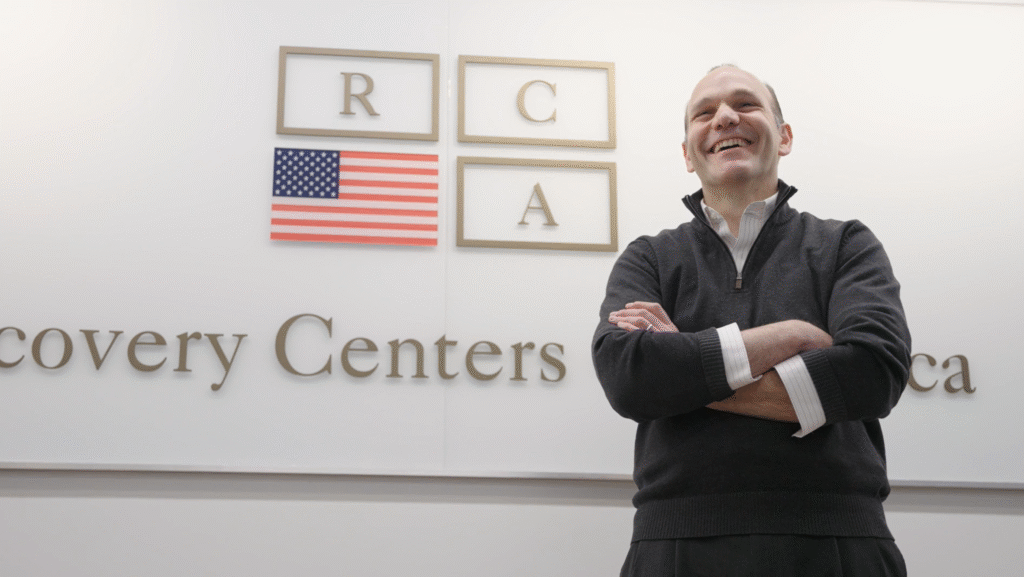
Brett Cohen is the President and Chief Executive Officer of Recovery Centers of America (RCA), a provider of quality rehabilitation services for those struggling with addiction and substance use disorder. A dynamic leader with three decades of experience, Brett has built a career dedicated to delivering high-quality care to complex, high-need populations.
Before joining RCA, Brett served as the Chief Operating Officer of Sevita and held leadership roles at industry giants including Fresenius Medical Care, Kindred Healthcare, and UnitedHealth Group. An alum of Wharton’s Health Care Management program, Brett combines deep operational expertise with a lifelong commitment to elevating standards across the healthcare continuum.
The Pulse: What first sparked your interest in healthcare?
Brett Cohen: It’s a long story, but the short version is that I come from a healthcare family. My father was a physician, my mother was a nurse, my brother is a physician, my wife is a physician, and my sister is a hospital administrator. Healthcare is in my DNA.
Early on, I followed that expected path. I worked as an EMT in the back of an ambulance in high school and college, fully intending to go to medical school. However, I eventually realized that being a practicing physician wasn’t the right path for me. I still wanted to stay in the industry, but I felt I could have a more significant impact on the business side, focusing on population-level health rather than individual clinical cases.
The Pulse: It’s a common story with folks in Healthcare Management—many leaders start with clinical intentions before pivoting. How did that pivot eventually lead you to the helm of Recovery Centers of America (RCA)?
BC: I’ve been in healthcare services for 30 years now, which feels like a long time to say out loud. I spent my early years as a consultant and doing some entrepreneurial startup work. The last 20 years, however, have been spent in larger “blue-chip” healthcare services companies like Fresenius and Kindred.
Before RCA, I was at a company called Sevita. It’s a large organization that many haven’t heard of, focused on home and community-based services for individuals with intellectual disabilities, brain injuries, and foster care needs. During my time there, I realized I am most energized by helping individuals who receive services from fragmented, “immature” sectors of healthcare where quality of care isn’t well-defined and where there is an opportunity to build a good business and raise the bar for an entire industry.
When I got the call about RCA, I didn’t have a background in the substance use disorder space. But I saw an industry that was behind many other sectors in terms of standardization. The provider community is full of passionate people, but it lacks the clinical sophistication seen elsewhere. The opportunity to create a universally recognized standard for “good care”—was incredibly attractive. RCA was in a period of transition and needed cultural and operational work, which is where I’ve focused my energy over the last two years.
The Pulse: One of our major themes for the conference this year is the healthcare workforce. We often hear about shortages from the perspective of major hospitals. How has the workforce pipeline affected your operations at RCA?
BC: Healthcare services have always been challenged by workforce dynamics. In my 30 years, I’ve seen it every year. Interestingly, the most challenging time wasn’t actually now; it was the period leading up to COVID-19 when the labor market was incredibly aggressive. Low-skilled, unlicensed care staff—home health aides, CNAs, direct support professionals—had so many choices for mobility that it created immense stress on the system. COVID then pushed things to a crisis point, though government intervention helped us through.
Today, it remains a challenge, though perhaps not the hardest I’ve ever seen. We see it at three levels:
Unlicensed Staff: This is a mobile workforce. Current shifts in immigration policy create a “halo effect.” Even though we aren’t hiring undocumented labor—we run background checks on everyone—the broader pressure on immigrant communities makes it harder to recruit for these pivotal roles.
Licensed Staff: Finding nurses and therapists varies by geography. In some states, we struggle to find therapists; in others, it’s nurses.
Physicians: While RCA hires fewer physicians, the chronic shortage of primary care doctors is a societal issue. Even in a physician-rich city like Boston, it’s hard to find one. Many of our doctors in this country are foreign medical grads, and if the environment in the US becomes less friendly, we will see a downstream impact, particularly on rural and underserved markets.
The Pulse: If you could wave a magic wand to alleviate these workforce pressures, what would you change?
BC: It’s hard to answer this without sounding self-serving, but it fundamentally comes down to the cost-versus-rate dynamic.
Currently, there are markets where we literally lose money caring for Medicaid patients. That is a tragedy because it means people in need are being turned away because the economics don’t work. If I could change one thing, it would be increasing reimbursement rates across both commercial and government payers. Higher rates allow me to offer more competitive wages, improve retention, and ultimately provide care to more people. While investment in education and retention strategies is vital, the “magic wand” is a rate structure that reflects the true cost of high-quality care.
The Pulse: RCA has a bold mission. How do you define it, and how have you changed the company’s operations to meet it?
BC: Our mission is simple: Saving one million lives. Since the company was founded, we have cared for nearly 87,000 unique individuals. We have a long way to go, but we are working very hard to get there.
When I was brought in 2.5 years ago, the goal was to transition RCA from an entrepreneurial startup to a scalable, professionalized organization. The founder was a passionate entrepreneur, and the company needed a different skill set for its next phase. I focused on culture, KPIs, management cadence, and clarity of roles.
One of the biggest shifts I implemented was the philosophy that healthcare is local. While we maintain a standardized clinical platform so that the quality of care is consistent, I empowered our local teams to be accountable for their specific communities. They are the ones closest to the patients and the referral sources. Moving from a centralized model to a local-empowerment model was a cultural challenge, but we are in a great spot now.
The Pulse: Looking at the state of addiction and recovery in America today, what is your vision for the next five years?
BC: The scale of the problem is staggering. There are 30 to 40 million Americans struggling with addiction, but only about 3 or 4 million are in care. That means 90% of the population who needs help isn’t getting it.
At RCA, our growth strategy is built on three pillars to close that gap:
The Hub and Spoke Model: Historically, RCA was built on intensive inpatient care—detox and residential treatment. We do that very well. But addiction is a chronic illness; you don’t just “get cured” and move on. We are evolving our model beyond the walls of our campuses. Every one of our inpatient centers has outpatient services on site (PHP and IOP), and we are now expanding into additional standalone outpatient centers so that when a patient finishes inpatient treatment, they can return to their job, school, and family while staying engaged in long-term care. We are building these “spokes” within an hour or two of our “hubs” (main campuses with inpatient and outpatient programming) to ensure continuity of care, rather than a start-and-stop experience.
Geographic Expansion: As of January 2026, we operate 15 facilities across nine states—including our newest inpatient facility in Central Florida and two newly opened outpatient spokes in Rolling Meadows, IL, and Newark, DE. We are moving thoughtfully into the South and Midwest.
Addressing Comorbidities: Most people with SUD also struggle with mental health issues, and RCA has always treated both together. What’s new is at select locations, we are expanding our service lines to treat primary mental health—depression, anxiety, OCD—even for those who don’t have a history of addiction. We’ve launched this in Indiana, Massachusetts, and are bringing it to Pennsylvania.
The Pulse: Does the “Hub and Spoke” model create issues with payers? Is it harder to get reimbursement for that outpatient “spoke” than the inpatient “hub”?
BC: Surprisingly, no. While payers are never “easy” to work with, PHP (Partial Hospitalization Programs) and IOP (Intensive Outpatient Programs) are widely recognized levels of care. We haven’t seen an unwillingness to participate there.
The bigger barrier to access is twofold: it’s the reimbursement economics I mentioned earlier, but it’s also stigma. There is a fear of stepping away from work or family to seek help. Part of our job is to give people the confidence that taking that step is what will eventually allow them to return to their communities healthier.
The Pulse: Finally, we have to talk about AI. Is it just a buzzword for you, or is it impacting your business?
BC: We are leaning into it. I usually think of healthcare as a late adopter, but it’s exciting to see us moving quickly here. We are looking at AI in three buckets:
The Back Office: Utilizing AI for revenue cycle management, talent acquisition, and data analytics. This is the “low-hanging fruit” that makes us more efficient.
Clinical Support: Specifically, ambient listening. We want to use technology to document sessions so our therapists can spend their time looking at the patient rather than a screen. Group therapy is harder for AI to parse than one-on-one, but the technology is improving, and we are experimenting with it.
Clinical Interventions: This is the cutting edge. Can chatbots or AI maintain engagement with a patient post-discharge? There is some data suggesting AI therapy can be incredibly effective. We’re not 100% there yet, but we are exploring it to see if it can help us provide better care.
Original Publication Here.
Contact us today to speak with a representative from Recovery Centers of America.